Class Photos on Picture Day: Common Questions from School Directors | Bay Area School Photography
Class photos are an important part of Picture Day, and directors often have questions about how they fit into the overall schedule.
When should class photos happen? What if children arrive late? How long do they take? What happens if a child doesn't want to participate?
Here are the most common questions I receive from Bay Area schools.
Should Class Photos Happen Before or After Individual Portraits?
Whenever possible, I prefer to start with class photos.
Many children feel more comfortable seeing me interact with the group before stepping in front of the camera themselves. It gives them a chance to observe from a distance and helps individual portraits go more smoothly later.
That said, many schools have children arriving throughout the morning. If not everyone is present, we typically begin individual portraits and schedule class photos later in the day once attendance is complete.
What I want to avoid is stopping individual portraits midway through the schedule to gather children for class photos and then restarting portraits again. A consistent flow is always easier for everyone: teachers, children, and the director.
How Long Do Class Photos Take?
Most class photos take between 5 and 10 minutes.
For children age 5 and older, the photography itself often takes only a couple of minutes.
Younger preschoolers and toddlers naturally require a little more flexibility. Some children may stand up unexpectedly, turn around to look at a teacher, or become interested in something happening nearby.
That is completely normal and expected at this age. And we adapt quickly!
Where Are Class Photos Taken?
Class photos can be photographed outdoors or indoors.
Outdoor class photos are ideal when the school has a shaded outdoor area with enough room.
We want to avoid children squinting in the sun, or a background that is too busy. A wall or some greenery works well for the background.
Indoor class photos work just as well when there is adequate space and supplemental lighting is used to ensure every child is clearly visible.
One advantage of indoor class photos is consistency. Outdoor conditions can change quickly depending on the weather, such as cloud cover. Indoors, the lighting from the flash remains consistent year after year.
Trust your photographer to find the best spot when they visit your school.
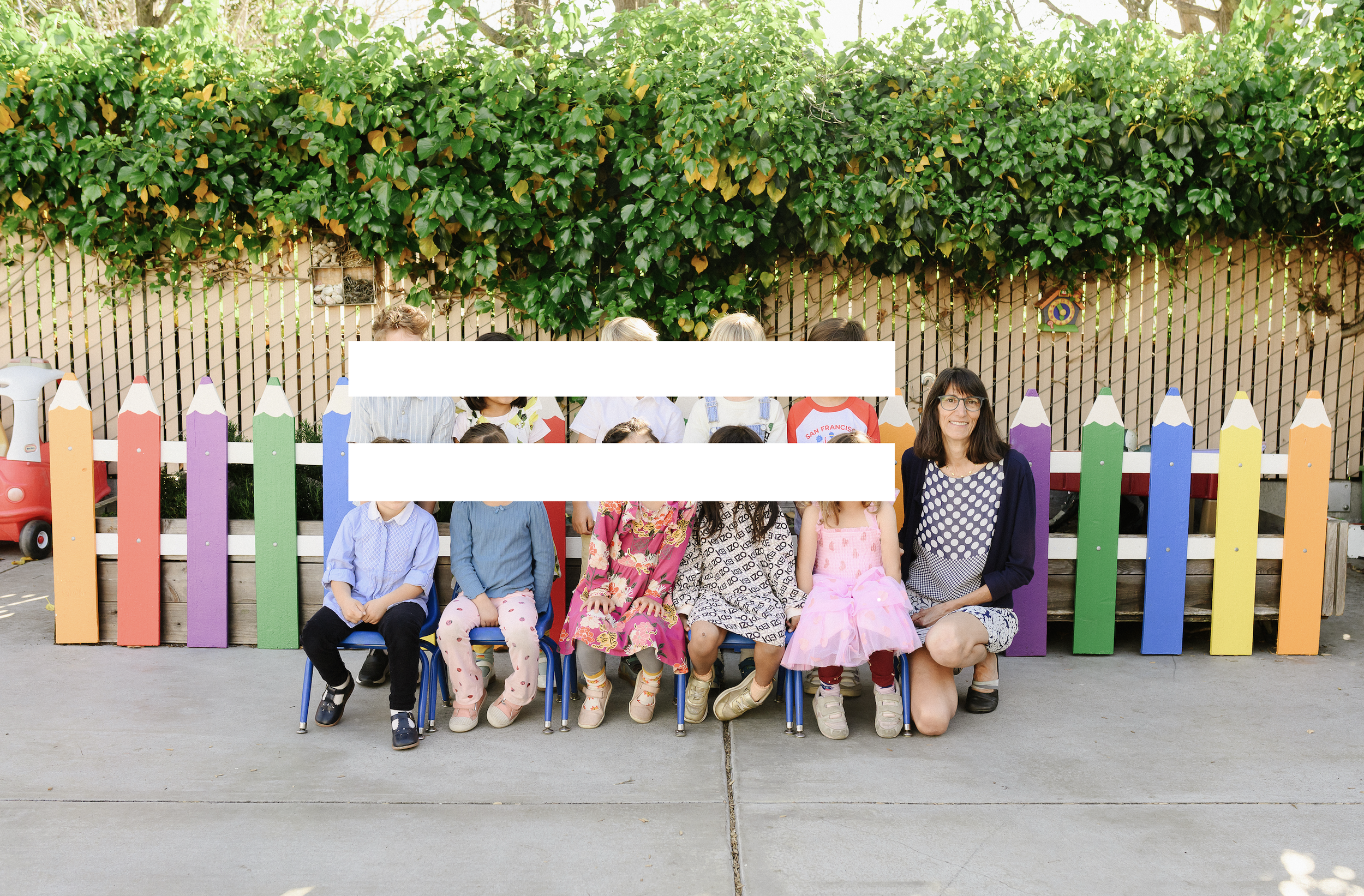
Outdoor class photo location
Open shade, enough room for benches and multiple rows of children, and easy access from the classrooms.
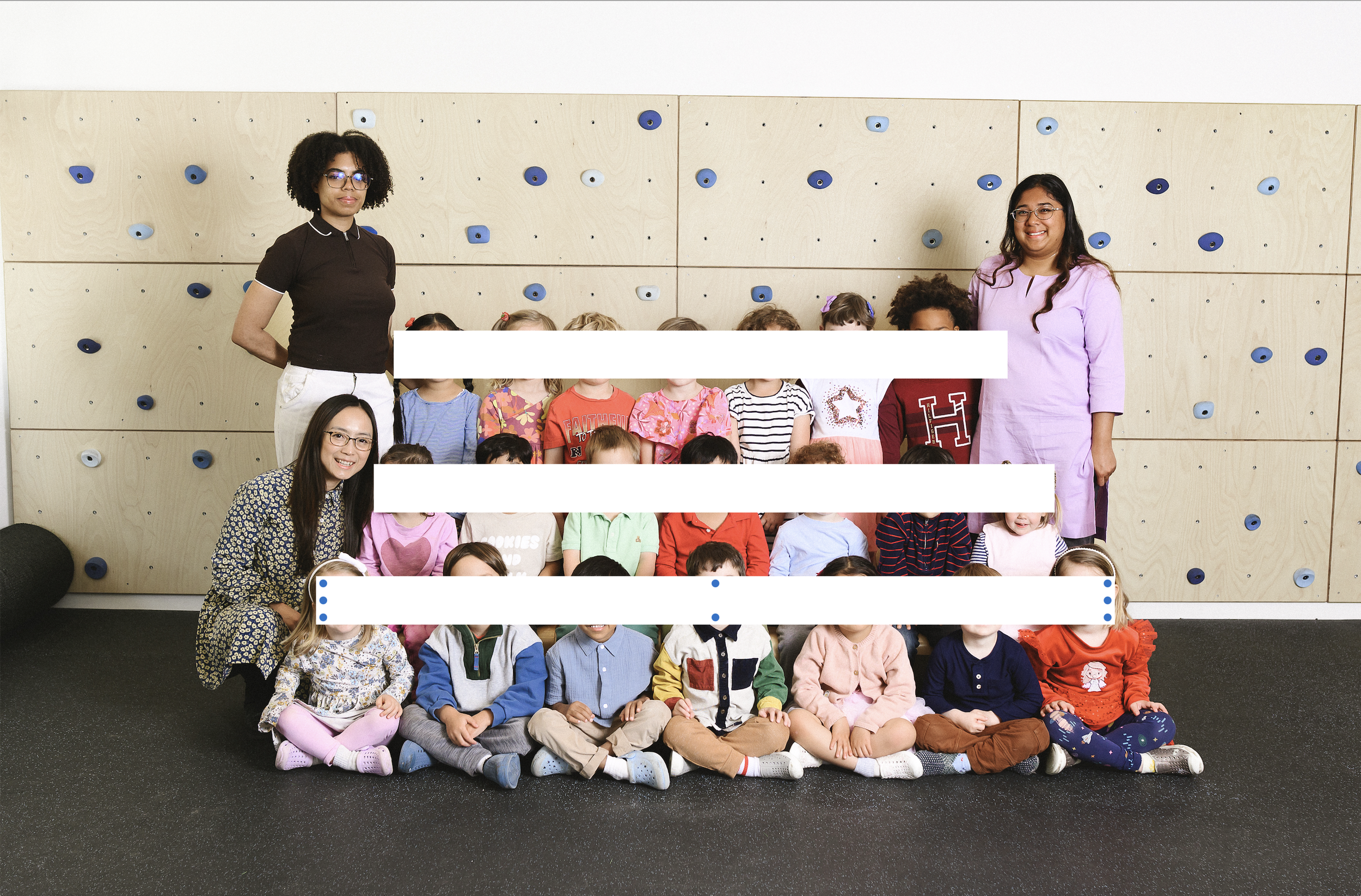
Indoor class photo location
Not every school has a shaded outdoor space! A classroom, multipurpose room, or large indoor area can work beautifully for class photos when there is enough room for children, teachers, and multiple rows.
What Does the School Need to Provide?
Schools typically provide benches or chairs.
A common arrangement looks like this:
Smaller children seated on a bench (or lined up chairs)
Medium-height children seated cross-legged in front
Taller children standing behind
Teachers standing in the back row and/or kneeling beside the group
The exact setup depends on the age of the children, the space and the size of the class.
Do Teachers Participate in Class Photos?
Yes.
Teachers are an important part of the classroom community and are included in class photos.
Families appreciate seeing the teachers who played such an important role in their child's school year!
What Happens If a Child Doesn't Want to Join the Photo?
This is a common concern, especially with younger children.
In my experience, children almost always want to be part of the group, and join the fun.
The goal is never to rush or guilt children into joining the class, but to make it feel safe to join the group.
To make it feel safe, they can sit on a teacher's lap or start by watching from nearby for a few minutes before deciding to join the group. Occasionally children will need a little extra reassurance.
Are Younger Classes More Challenging?
Children under five are still developing the ability to sit with a group and focus in one direction for a photograph.
A toddler may suddenly decide to lie down, turn around, wave to a teacher, or leave their spot entirely.
This is normal and to be expected!
The role of the photographer is to engage the group, keep things fun, and work quickly while attention is still focused.
Sometimes that means making silly faces or putting a toy monkey on my camera lens to make them laugh.
Do you digitally add absent children or create composite class photos?
Every class photo is professionally edited for color, exposure, and overall presentation.
For standard class photos, I choose the strongest image from the series and make sure it reflects the class accurately and beautifully.
I do not normally combine multiple photos together or digitally add children who were absent on Picture Day.
However, if a school prefers a composite class photo to accommodate children who were absent on Picture Day, I'm happy to discuss that option in advance.
What If a Parent Doesn't Like Their Child's Expression?
This happens, occasionally.
I select the strongest overall image for the gallery based on the group as a whole.
If a parent would like me to review the class photo series for an alternate image, I can do so for an additional fee.
How Are Class Photos Sold?
Class photos are included in the online gallery along with individual portraits.
For online privacy reasons, class photos are offered as printed products only and are not available as digital downloads.
Parents order directly through the gallery system, so schools do not need to manage orders or payments.
What Makes a Successful Class Photo?
A successful class photo is not necessarily a perfect class photo.
It is one that captures the children, teachers, and classroom community in a way that families will enjoy looking back on years later.
With good planning, teacher support, realistic expectations, and a photographer who knows how to engage children quickly, class photos can be one of the most meaningful parts of Picture Day.
Related Resources
→ How Preschool Photo Day Works